

Menopause affects all women, typically between the ages of 45 and 55. Yet, this subject remains often ignored, or even taboo, in the workplace. However, neglecting this natural phase can have significant consequences on the mental and physical health of employees: insomnia, chronic fatigue, cognitive issues, hot flashes, anxiety... Symptoms largely linked to night sweats, which disrupt sleep and directly impact day-to-day quality of life.
These symptoms directly harm work productivity, engagement, and quality of professional life. While companies invest in diversity and well-being, neglecting menopause means missing out on a major strategic challenge: that of sustainable performance.
Table of Contents
- The impact of menopause on workplace productivity
- A professional world still poorly adapted to menopause
- International best practices: inspiring models
- What French companies can implement starting today
- Athana: innovation at the service of professional well-being
- FAQ – Menopause and workplace productivity
- Conclusion: Taking action for a more humane professional world
The impact of menopause on workplace productivity
Invisible but very real symptoms
Menopause-related issues are not limited to hot flashes. Many women experience intense fatigue, often caused by disrupted sleep. This lack of rest leads to cognitive slowing, dubbed "brain fog": forgetfulness, decreased concentration, slowness in decision-making...
A loss of confidence that is difficult to compensate for
These symptoms directly affect performance. Some employees redouble their efforts to hide their condition, at the risk of falling into presenteeism: they are physically present, but mentally absent. The fear of judgment or stereotypes pushes them into silence, increasing their isolation.
A professional world still poorly adapted to menopause
 A double taboo: health and gender
Menopause suffers from a double invisibility: it is a health issue, but also a gendered one. While companies know how to handle pregnancy, they very rarely integrate menopause into their HR policies.
According to a British study conducted by Forth With Life among 1,000 menopausal employees in the UK, 90% believe that their company does not have an adequate policy to support them: a figure that reveals the silence and lack of initiatives on the subject.
High-constraint sectors particularly affected
In physically demanding professions such as logistics, healthcare, or teaching, symptoms can be particularly disabling. Without flexibility or accommodations, some women have no choice but to take sick leave or resign, resulting in a precious loss of experienced talent.
International best practices: inspiring models

The UK is ahead on the issue
The United Kingdom is one of the first countries to take this issue seriously. Companies like the BBC or the NHS have implemented clear policies: team awareness, manager training, flexible hours, special leave...
Effective awareness campaigns elsewhere
In Canada, Australia, or the Netherlands, national campaigns encourage dialogue and break the taboo. Some companies offer quiet spaces, better ventilation, or access to psychological support.
What French companies can implement starting today
1. Awareness and training for management
Training managers and HR professionals on the realities of menopause is an essential first step. It helps create a climate of trust and listening, necessary for proper support.
2. Adapt work organization
- Occasional remote work
- Flexible hours
- Shorter or better-planned meetings
These simple adjustments reduce the pressure on the affected employees.
3. Improve the physical environment
Quiet spaces, good ventilation, or even access to showers can transform daily life at the office. These are inexpensive solutions with an immediate impact on well-being.
4. Offer comprehensive support
Offering well-being services, coaching, or partnerships with specialized players like Athana is an innovative and humane approach.
Athana: innovation at the service of professional well-being
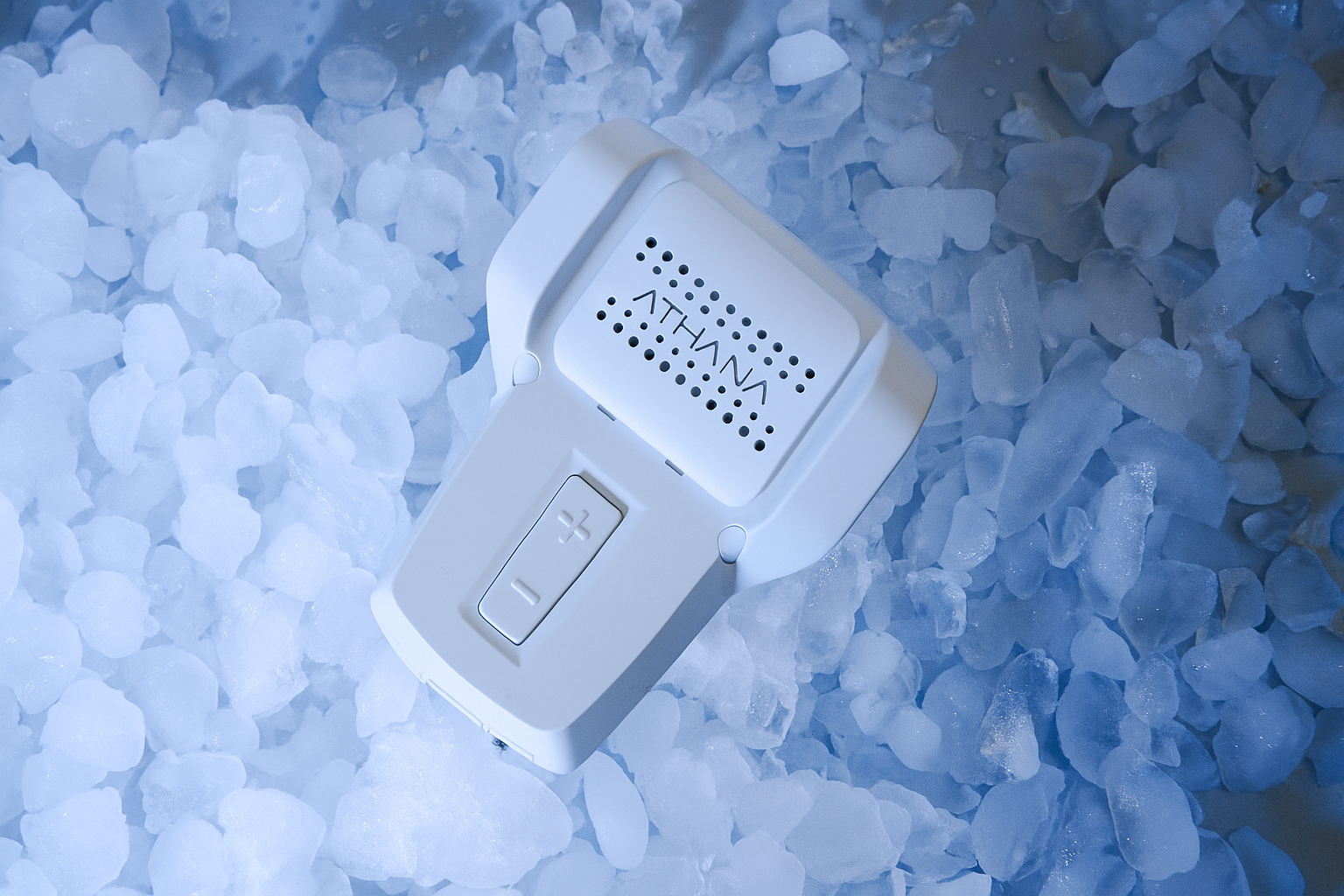
At Athana, we believe that technology can make professional life more fluid for menopausal women. That is why we developed Héra: a wearable natural cryotherapy device, specially designed to relieve hot flashes in the workplace.
To learn more about our innovative approach and user feedback, check out our article dedicated to the origin of the creation of Héra.
In addition to providing immediate relief, Héra connects to a smart mobile app, allowing for better symptom tracking and a contribution to medical research. It is both a personal and a collective solution.
FAQ – Menopause and workplace productivity
1. What are the most common symptoms that affect workplace performance?
Fatigue, insomnia, memory loss, anxiety, irritability, and hot flashes.
2. Why is menopause still taboo in companies?
Due to lack of knowledge, gender stereotypes, and the absence of specific HR policies.
3. Which sectors are most affected by the lack of adjustments?
Logistics, healthcare, education, hospitality: all jobs with rigid hours or physical exertion.
4. What concrete solutions can be implemented?
Team training, schedule flexibility, office layout improvements, psychological support.
5. What is presenteeism related to menopause?
It is the act of coming to work despite disabling symptoms, to the detriment of actual productivity.
6. Are there innovations to support employees?
Yes, solutions like Athana's Héra offer natural, discreet, and connected devices to relieve symptoms.
Conclusion: Taking action for a more humane professional world
It is urgent to break the silence about menopause at work. This natural life stage, experienced by half of the female workforce, must finally be taken into account in inclusion, performance, and health policies.
Companies have everything to gain by acting: less absenteeism, higher retention, and a more serene climate. At Athana, we are convinced that every menopausal woman carries a unique strength. It is up to us to honor and support it.

Leave a comment
All comments are moderated before being published.
This site is protected by hCaptcha and the hCaptcha Privacy Policy and Terms of Service apply.