
Table of Contents
1. Introduction: Menopause, a mirror of cultures
2. Menopause in the West: Between taboo and invisibility
3. Asia: Menopause as a natural transition
4. India, China, and Sikh cultures: Wisdom as a reward
5. Africa: Between stigma and social recognition
6. What science tells us: Cultural perception and symptom intensity
7. Redefining menopause, together
8. FAQ Menopause & Héra device
Introduction: Menopause, a mirror of cultures
Menopause around the world is much more than a biological stage: it is a revealer of social values and representations of the female body.
While its symptoms—hot flashes, insomnia, mood swings—are universal, their perception and intensity depend deeply on the cultural context.
This journey around the world aims to understand how societies shape the experience of menopause, balancing pain, liberation, and wisdom.

2. Menopause in the West: Between taboo and invisibility
In Europe and North America, menopause is often perceived as a loss: a loss of youth, fertility, and, at times, femininity.
Medical and media discourse reduces it to a declining transition: weight gain, wrinkles, and lower libido.
This negative vision fuels the menopause taboo. Many women go through it in silence, discomfort, and solitude.
The cosmetic and pharmaceutical industries sustain this unease with their "anti-aging" or hormonal products. Yet, voices are rising to demand a more positive and peaceful view of this period.
Sources:
- Cécile Charlap, La Fabrique de la ménopause – CNRS Éditions
- Pubmed, How women experience menopause: the importance of social context
- Susan Bordo, Unbearable Weight (1993)
- Manon Nougier, Menopause and cultural representation.

3. Asia: Menopause as a natural transition
In Japan, Korea, or China, menopause is not experienced as a disruption, but as a simple energetic transition.
The Japanese term kōnenki refers to a change of phase, not an end.
Asian women report far fewer symptoms: about 10% of them suffer from hot flashes, compared to 75% of Western women.
This contrast is explained by a holistic cultural approach to the body, but also by dietary habits (soy, green tea, brown rice) and a valuation of aging as a period of wisdom.
Sources:
- Margaret Lock, Encounters with Aging.
- Melby et al. (2005) – PubMed
- Freeman & Sherif (2007) – Climacteric

4. India, China, and Sikh cultures: Wisdom as a reward
In many South Asian cultures, the end of menstruation symbolizes the liberation of the body.
For Sikhs, menopause marks the end of a period of religious impurity and opens the path to a new spiritual authority.
Women become figures of respect and guidance.
In China, especially in rural areas, this period is experienced as a time of transmission and inner meditation.
This spiritual approach reinforces self-esteem and reduces the perception of physical symptoms.
* Sikhism, or Sikhi, is a monotheistic Dharmic religion born in the 15th century in the Punjab region, in the north of the Indian subcontinent.
Today, it is the fifth largest religion in the world by number of followers, with about 30 million practitioners.
Sources:
- Dyer & McKeown (2002), Springer
- Sayeed Unisa (2007), Asian Population Studies
- Cambridge University Press, Women in China

5. Africa: Between stigma and social recognition
In Africa, the perception of menopause is varied.
In some Muslim-majority countries, it remains taboo because it is associated with the loss of fertility.
But elsewhere, in Ghana, Uganda, Ethiopia, or South Africa, menopause is a symbol of power and respect.
Post-menopausal women acquire a public voice and become mediators or community leaders.
This shift in role illustrates how much the social value of the female body varies according to culture.

6. What science tells us: perception and symptoms
Scientific research confirms one essential thing:
👉 the more socially valued menopause is, the less intense the symptoms.
This correlation is explained by the reduction of stress and shame, and by a better acceptance of the aging body.
Thus, the experience of menopause is not solely biological: it is also shaped by collective beliefs, spirituality, and women’s own voices.

7. Conclusion: Redefining menopause, together
Menopause around the world teaches us that this stage of life is not an end, but a cultural and personal rebirth.
To transform this moment into a positive experience, we must change the narratives, encourage open dialogue, and offer natural solutions that respect the body.
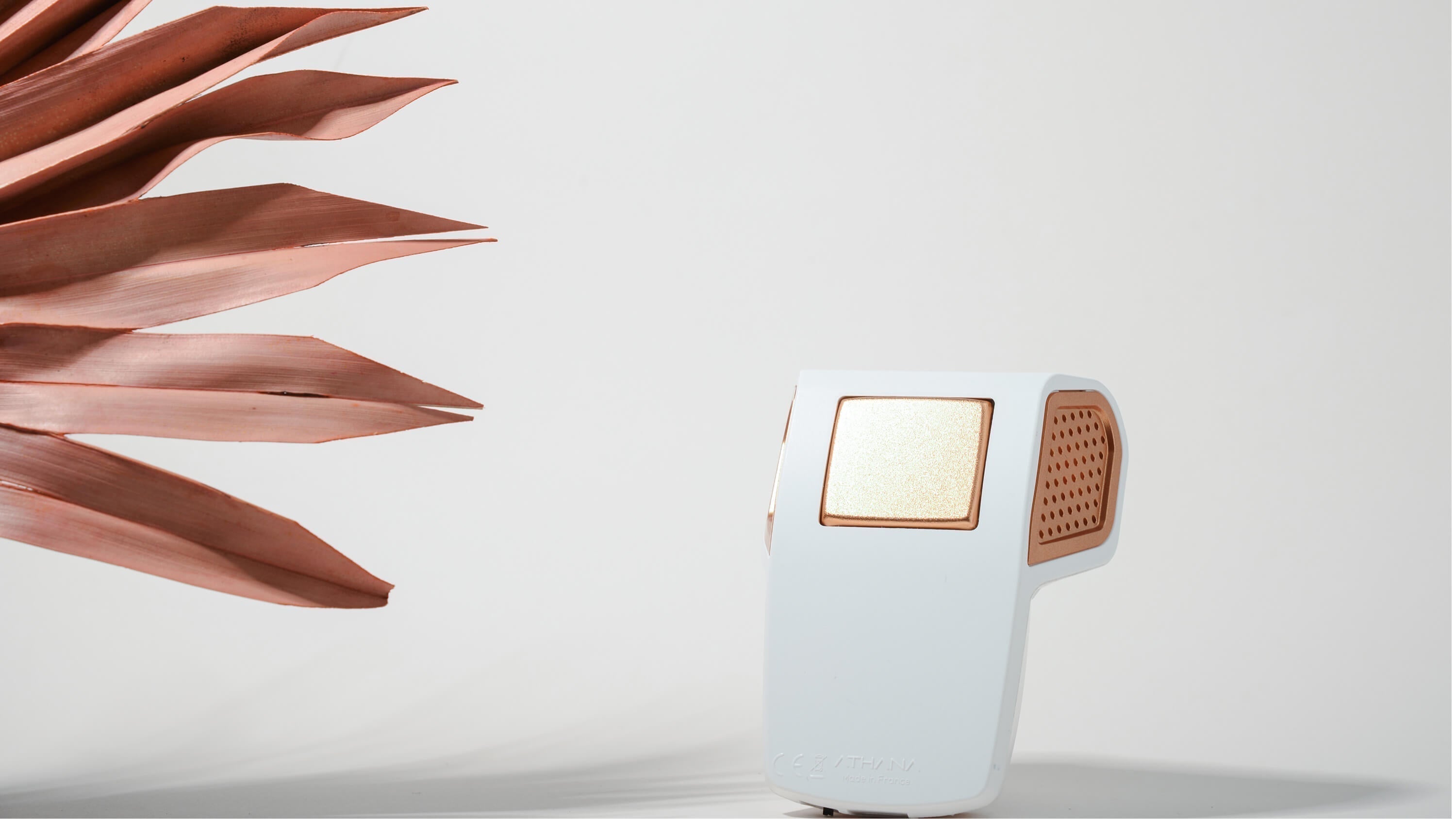
It is in this spirit that Athana has designed Héra, a portable cryotherapy device that is 100% natural, hormone-free, and instantly relieves hot flashes.
A gentle and elegant innovation for experiencing menopause differently.

8. FAQ: Menopause & Héra device
What is menopause?
It is a natural phase of a woman's life, marked by the cessation of menstruation for 12 consecutive months, on average around the age of 50.
What are the most frequent symptoms?
Hot flashes, night sweats, insomnia, irritability, vaginal dryness, joint pain, fatigue.
Do all women experience menopause the same way?
No. The experience depends on genetics, lifestyle, mental health… and above all, culture.
How does Héra work?
Héra diffuses cold between 5 and 10°C on thermosensitive areas (neck, wrists, face) to soothe hot flashes in less than 10 seconds.
Is Héra a medical device?
Not yet: it is currently sold as a wellness device. However, Class 2A clinical trials will begin in 2025 for its medical recognition.
Join the Athana community!
To learn more, discover inspiring testimonials, or ask your questions:
Follow us on social media:
- Instagram: @athana.off
- TikTok: @athana.off
- Facebook: Athana
- LinkedIn: Athana
Satisfaction guaranteed or your money back for 30 days.
Have a question? Email us at info@athana.shop
Leave a comment
All comments are moderated before being published.
This site is protected by hCaptcha and the hCaptcha Privacy Policy and Terms of Service apply.