

Cryotherapy and menopause: can cold relieve a hot flash?
Published on May 18, 2026
Table of Contents
- Hot flashes: a universal but misunderstood symptom
- Why does the body "overheat" during menopause?
- Targeted cryotherapy: what does science say?
- Does local cold really work in seconds?
- Cryotherapy vs. hormone therapy: what is the alternative?
- How to incorporate cold into your daily life with Héra
- FAQ: your questions about cold and menopause
Cryotherapy and menopause: can cold relieve a hot flash?
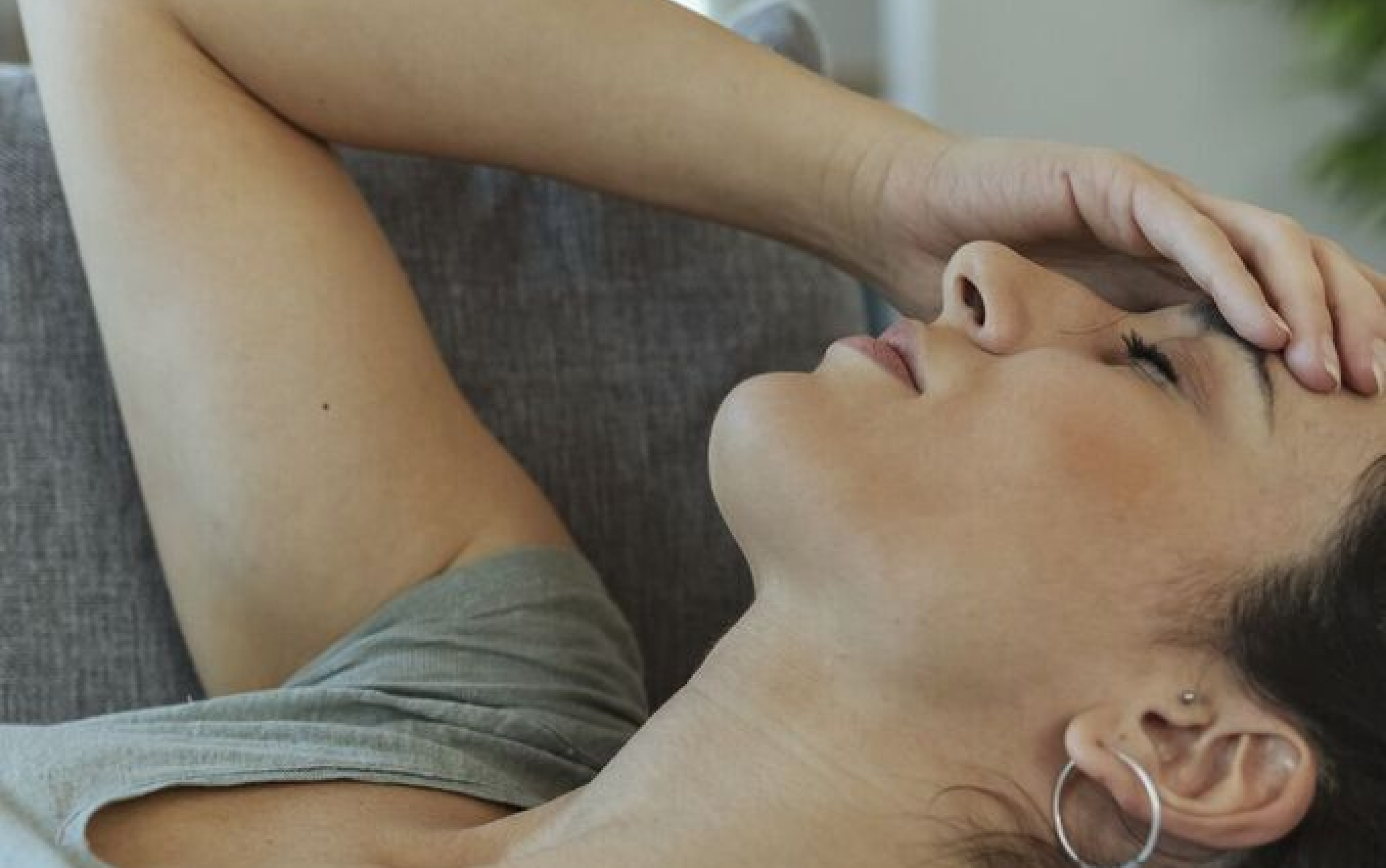
A sudden heat wave in the middle of a meeting, night sweats that wake you up at 3 a.m., a red face without warning… Hot flashes affect between one-third and one-half of women at the time of menopause, according to INSERM. And when we consider that 14 million French women are currently menopausal, we understand the scale of the issue.
Faced with this phenomenon, a logical question emerges: if the sensation is one of unbearable heat, can cold soothe it? The answer, long intuitive, is now validated by science. Let’s break it down.

1. Hot flashes: a universal but misunderstood symptom
Before talking about a solution, let’s understand the problem. Vasomotor flushes are often downplayed as a simple "hot spell," even though they can last for an average of 7.4 years, or even more than 10 years for some women.
A few figures to measure the challenge:
- 87% of menopausal women have at least one symptom in addition to the cessation of menstruation (source INSERM)
- 20 to 25% of these women experience moderate to severe symptoms that affect their quality of life
- 500,000 new women enter menopause each year in France, according to a senate report relayed by the Foundation for Medical Research
Hot flashes are therefore not a minor detail. They disrupt sleep, concentration, and social and professional life. And yet, non-hormonal solutions remain rare and little known.

2. Why does the body "overheat" during menopause?
To understand why cold works, you must understand what happens in the brain during a hot flash.
The key role of the hypothalamus
The hypothalamus is the body's internal thermostat. Nestled in the heart of the brain, it constantly maintains body temperature at around 37°C by orchestrating physiological responses (sweating, shivering, vasodilation, etc.).
During menopause, the drop in estrogen disrupts this thermostat. Concretely, the hypothalamus’s "thermoneutral zone" narrows. As a result, the slightest variation in internal temperature, sometimes imperceptible, is interpreted as overheating. The brain then triggers an emergency cooling response: dilation of blood vessels (redness), intense sweating, increased heart rate.
KNDy neurons, new suspects identified
The most recent French research (médecine/sciences journal, 2025) highlights a central player: the KNDy neurons located in the arcuate nucleus of the hypothalamus. These neurons, which produce kisspeptin, neurokinin B, and dynorphin, undergo unusual hypertrophy during menopause. Their dysregulation triggers the infamous vasomotor flushes.
It is this better understanding that is paving the way for targeted non-hormonal treatments, of which cryotherapy is one.

3. Targeted cryotherapy: what does science say?
Cryotherapy, from the Greek kryos (cold) and therapeia (care), is not new. Used for decades in sports medicine, physical therapy, and dermatology, its application to menopause symptoms is more recent.
Data from the Héra device
The usage study conducted in 2024 by Athana on 100 menopausal women provides concrete evidence:
- 96% of participants reported satisfaction
- Average 32% decrease in the frequency of hot flashes
- Immediate 15°C reduction in skin temperature at the point of application
This data confirms the intuition: cold applied locally to thermosensitive areas acts directly on the perception of heat.
4. Does local cold really work in seconds?
Yes, and here is why. The mechanism is based on three combined physiological effects:
1. Stimulation of cutaneous thermoreceptors
The skin contains receptors sensitive to cold (specifically the TRPM8 receptor). When they are stimulated on the neck, face, wrists, or décolleté, areas that are highly innervated and close to large blood vessels, they send an immediate signal to the hypothalamus: "the temperature is dropping."
2. Cooling of circulating blood
Thermosensitive areas are crossed by superficial arteries. Cooling the skin in these places essentially cools the blood that irrigates the brain directly. The overheating signal perceived by the hypothalamus is therefore soothed in seconds.
3. Activation of the parasympathetic system
Controlled cold triggers a parasympathetic (relaxation) response. This lowers the heart rate, anxiety, and… the feeling of oppression associated with the flash.
It is precisely this trio that portable cryotherapy seeks to exploit, without thermal shock or side effects.

5. Cryotherapy vs. hormone therapy: what is the alternative?
Hormone Replacement Therapy (HRT) remains, according to INSERM, the most effective treatment for relieving hot flashes. But it is not suitable for all women:
- History of hormone-dependent cancer (breast, endometrium)
- Thromboembolic history
- Cardiovascular history
- Women who simply do not want hormone treatment
For these women, and there are many, non-hormonal alternatives are invaluable. INSERM mentions the recognized effectiveness of hypnosis and cognitive-behavioral therapies, but with a lead time and cost that make them difficult to access on a daily basis.
Portable cryotherapy positions itself as a complementary and immediate response: no medication, no effect on hormones, no addiction. It can be used alone or in combination with other approaches (anti-inflammatory diet, physical activity, yoga, sophrology).

6. How to incorporate cold into your daily life with Héra
This is exactly the promise of Héra, the portable cryotherapy device. Designed like an "electronic ice cube," Héra reaches its ideal temperature in 5 seconds and fits anywhere: in a bag, a desk drawer, on the nightstand.
How to use it?
- Turn on Héra, the cold surface is ready in seconds
- Apply to a thermosensitive area, neck, chest, inside of wrists, or face
- Enjoy the relief, the cooling sensation lasts for about ten minutes
No chemicals, no melting ice cubes, 5 intensities of cold adjustable according to discomfort. Designed and manufactured in France.
Take back control, in seconds
Are you tired of suffering through your hot flashes day and night?
Discover Héra, the first portable cryotherapy device designed for menopausal women. Immediate relief, no hormones, no addiction.
More than 6,000 women already relieved, make cold your new ally.
7. FAQ: Your questions about cryotherapy and menopause
Can cold really stop an ongoing hot flash?
Yes. Applied to a thermosensitive area (neck, face, wrists), cold sends an immediate signal to the hypothalamus and stops the vasomotor cascade in seconds. Héra users report relief in less than 10 seconds.
Is cryotherapy dangerous?
Localized and controlled cryotherapy (like that offered by Héra) has no known side effects. It is very different from whole-body cryotherapy in a chamber, which requires medical advice.
How long do hot flashes last during menopause?
On average 7.4 years, but they can persist for more than 10 years for about a quarter of women, according to French scientific data.
Does cryotherapy replace hormone therapy?
No. It does not correct hormonal imbalance and does not replace estrogen. However, it acts effectively on the symptoms: hot flashes, night sweats, discomfort. It is particularly interesting for women who cannot or do not wish to take HRT.
Can I use Héra at night?
Yes. It is actually one of the most popular uses. Placed on the nightstand, Héra allows you to stop a night sweat in seconds without getting up or turning on the light.
❓ What else can be done to relieve hot flashes naturally?
There are several levers: limit caffeine, alcohol, and spicy dishes (which dilate blood vessels), practice regular physical activity, incorporate deep breathing or yoga, and prioritize an anti-inflammatory diet. Targeted cryotherapy complements, rather than replaces, this overall lifestyle.

Join the Athana community!
Discover Héra and access reliable information about menopause, its symptoms, and solutions to live through it better.
Follow us on social media:
- Instagram: @athana.off
- TikTok: @athana.off
- Facebook: Athana
- LinkedIn: Athana
Satisfied or refunded for 30 days.
A question? Write to us at info@athana.shop

Leave a comment
All comments are moderated before being published.
This site is protected by hCaptcha and the hCaptcha Privacy Policy and Terms of Service apply.