
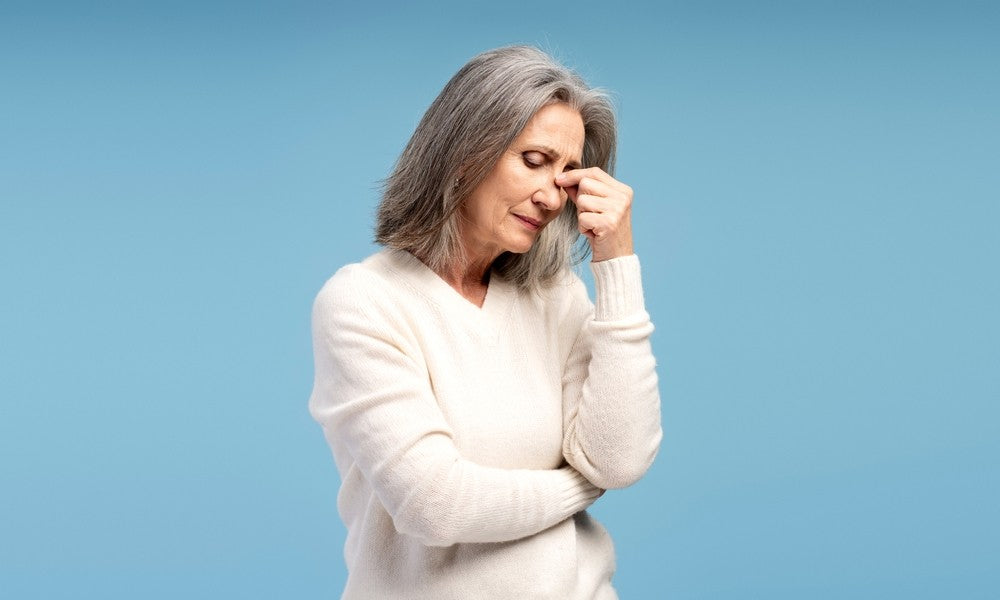
We often talk about hot flashes, sleep disturbances, pelvic pain, or even vaginal dryness when discussing menopause. But what we discuss less is what happens in the mind. That emotional fatigue, that mental slump, that blues with no apparent cause—and yet, for many women, it is the heaviest burden to bear.
Depression is not a myth; it is not "all in your head." It is the result of a real hormonal imbalance, where estrogen levels drop sharply, disrupting the natural mechanisms that regulate mood, energy, and motivation. Added to this are often life changes: children leaving the nest, a feeling of invisibility, chronic fatigue, latent anxiety... an emotional cocktail that is difficult to digest.
- Does menopause affect morale?
- Why does menopause impact our mood?
- What are the symptoms of mental menopause?
- Menopause and depression: tell-tale signs
- How to treat depression during menopause?
- Depression and menopause: what to remember?
During menopause, mood swings, sudden irritability, moments of sadness, or insomnia are not signs of weakness. These are menopause symptoms just as important as physical pain, but the good news is that you can take action.
What you are feeling is not inevitable; there are simple and effective ways to regain control: understanding what is happening in your body, soothing perimenopause symptoms, surrounding yourself with the right people, and making the right daily choices.
In this article, we will talk truthfully, without taboos. Because it is time to break the silence surrounding mental health during menopause, and to learn to navigate this stage gently, and above all, without losing yourself.
Does menopause affect morale?
 Yes, menopause can affect morale, and many women experience it without always daring to talk about it. It is a period of transition that is often accompanied by mood swings, emotional fatigue, or even a drop in motivation or passing blues.
What you are feeling is neither rare nor abnormal... it is actually one of the most common, yet most taboo, symptoms of menopause because we do not always dare to speak about it. Mental health during menopause deserves to be taken as seriously as other physical signs.
So if you are going through a more fragile phase, know that you are not alone, and above all: there are solutions to regain your balance.
Why does menopause impact our mood?
Female sex hormones, especially estrogen and progesterone, play a much broader role than we imagine. They do not just regulate the menstrual cycle: they also influence key brain functions, including your emotional balance.
When menopause sets in, the drop in these hormone levels leads to a real hormonal imbalance, which can disrupt the production of neurotransmitters such as serotonin and dopamine, the chemical messengers that influence motivation, sleep, stress management, and general mood.
The result: you may feel more irritable, hypersensitive, or go through phases of low morale for no apparent reason. These hormonal changes related to menopause sometimes create emotional instability that is difficult to explain, yet very real.
It is important to understand that these variations are not "all in your head"; they are biological, physical, and completely natural. They are full-fledged menopause symptoms that should neither be minimized nor endured in silence.
What are the symptoms of mental menopause?
 Beyond the well-known physical signs, menopause can cause a real emotional upheaval. Some symptoms are sometimes subtle, but when added together daily, they can weigh heavily on your mental health and overall well-being.
Here are the most frequent manifestations:
- Depression: it is estimated that about 20% of women experience an episode of depression related to menopause. It is not just fatigue, it is a bout of blues, a feeling of emotional exhaustion, sometimes accompanied by a loss of meaning—in short, you are depressed. If you feel sad without being able to explain it, know that you are not alone and that there are solutions.
- Mood swings: you may go from laughter to tears for no apparent reason, or feel sudden irritability over things that did not bother you before. Up to 7 out of 10 women report feeling more tense or easily annoyed during perimenopause. These emotional variations are directly linked to the hormonal changes that impact your emotional tolerance.
- Sadness or inner emptiness: crying for no reason? Feeling a lump in your throat without really knowing why? This kind of overwhelming emotion is typical of this period. And it is okay. There is no shame in letting a few tears flow: it is also a way for the body to release accumulated tension.
- Anxiety and stress: that feeling of your heart beating too fast, thoughts racing, an internal alarm that never shuts off... Many women discover or see anxiety disorders worsen during menopause. Panic attacks, constant worry, or hypersensitivity to stress are very common.
- Sleep disturbances: insomnia affects between 40 and 50% of menopausal women. Difficulty falling asleep, hot flashes, frequent awakenings, night sweats... poor quality sleep then accentuates all other symptoms, especially mental fatigue, low morale, or irritability.
- A loss of motivation: do you feel less dynamic, less involved in what you used to be passionate about? This loss of drive is often linked to hormonal fluctuations, but also to general fatigue and a loss of self-confidence.
- A decrease in self-confidence: we just talked about it... the mirror becomes harder to face. You doubt yourself, your appearance, your legitimacy. The physical transformation such as weight gain that accompanies menopause can sometimes erode your self-image and lead to withdrawal or profound malaise.
- Sexual activity: less desire, less pleasure, or even discomfort at the idea of intimacy or even pain… These sexual life disturbances are frequent during menopause and can also weigh on your morale. They deserve to be addressed without taboo.
What is depression?
Depression is a psychiatric illness in its own right. Unlike simple passing sadness, it sets in over time and deeply disorganizes mental and emotional life. It affects the body, the brain, emotions, and even self-perception.
Medically, depression is a mood disorder characterized by a lasting alteration of neurotransmitters like serotonin, dopamine, and norepinephrine, which participate in the regulation of mood, motivation, pleasure, and energy. When these substances are unbalanced, the entire nervous system is affected.
In concrete terms, this translates into profound sadness, a loss of interest in daily things, crushing fatigue, as well as physical symptoms such as diffuse pain, sleep disturbances, or even motor and intellectual slowing.
But what makes depression so distinctive is its ability to tint every thought with a negative tone. The depressed person feels useless, guilty, sometimes even ashamed of not "feeling well," even though objectively, nothing serious seems to be happening. It is this feeling of emotional injustice that makes it so difficult to live through... and so difficult to express.
Unlike a simple blues, depression lasts. It sets in for several weeks, months, or even years, and prevents you from functioning normally: at work, at home, in relationships. In severe cases, it can even lead to dark thoughts...
But it is essential to repeat: depression is an illness, not a weakness. It requires comprehensive care, which can include psychological monitoring, medication, or more natural approaches.
Why can a menopausal woman suffer from depression?
Menopause marks a major hormonal transition, but that is not all. It is also a moment when many things change in parallel: your body, your family life, your social role, sometimes even your relationship with work or sexuality.
The hormonal changes of menopause, especially the sudden drop in estrogen, can weaken emotional balance. But added to this are often very concrete stress factors: children leaving home, growing loneliness, grief, or simply the feeling of "turning a page."
This accumulation of physical, psychological, and relational upheaval creates a terrain vulnerable to depression. Recognizing this is already a form of self-care, because no, you are not weak.
You are simply going through a powerful period of transformation, and sometimes, unfortunately, you may get depressed...
Menopause and depression: tell-tale signs
 Generally, the signs that announce upcoming depression are similar to those that accompany menopause... we have already talked about them, but here is a brief summary:
- Persistent sadness
- Irritability
- Loss of interest
- Sleep disturbances
- Constant fatigue or loss of energy
- Appetite or weight changes
- Difficulty concentrating
- Dark thoughts
It is crucial to consult a healthcare professional if these symptoms persist or worsen; only a doctor can determine whether or not you are actually experiencing depression. On the other hand, studies show that women who have had periods of depression in the past are more susceptible to relapsing during menopause.
How to treat depression during menopause?
 Good news: there are solutions, and no, they do not necessarily involve medication. During menopause, depression can be managed, relieved, and even prevented thanks to varied, complementary approaches that are often very simple to implement.
The goal is not to make emotions "disappear," but to regain balance, to see clearly when everything seems blurry, and above all, to reconnect with yourself. Every woman is different, every body has its own rhythm, so there is no single miracle method, but several paths which, combined or adapted, can truly make a difference.
In the following sections, we will explore these natural solutions, psychological approaches, or those related to lifestyle, which can help you navigate this period more serenely...
Managing stress
When going through menopause, stress is not just a reaction to external events: it also becomes a direct consequence of hormonal fluctuations. Indeed, the decrease in estrogen makes the nervous system more sensitive, which can amplify the slightest tension and trigger spikes in anxiety.
This is why learning to manage stress becomes fundamental for preserving one's mental health during this period. This does not mean eliminating everything that is burdensome—that is impossible—but rather arming oneself with concrete tools to better cope with it.
Practices such as deep breathing, heart coherence, or guided meditation can, in just a few minutes a day, reduce symptoms of menopause-related depression. They allow you to slow down the pace, calm the mind, and send a clear signal to the brain: "I am safe."
Sophrology or gentle yoga are also wonderful allies: they reconnect the body and mind, improve energy circulation, and strengthen that sense of inner calm often undermined by hormonal menopause changes.
And if you feel that anxiety is taking up too much space, cognitive-behavioral therapy (CBT) is particularly effective; it helps to identify negative thought patterns, transform them, and regain control over your emotions.
Calming menopause symptoms
 When the body changes, everything changes; it then becomes difficult to separate what is physical from what is emotional. Menopause symptoms: hot flashes, night sweats, fatigue, joint pain, intimate dryness, often create a climate of general discomfort. And the more the body suffers, the more the mind tenses up. This is why relieving the physical manifestations of menopause can have a direct impact on your mood, your energy, and your mental balance. Several approaches exist, depending on your needs and your sensitivity.
Some choose natural solutions, such as adaptogenic plants, herbal medicine, or innovative devices. This is the case with the Héra device from Athana, which uses cryotherapy to instantly soothe hot flashes, sleep disorders, and other discomforts linked to menopause. A non-hormonal method, without side effects, that helps regain physical comfort... and a more serene mind.
Others use hormone replacement therapy (HRT), in the form of estrogen, sometimes combined with progesterone. They can effectively alleviate symptoms but also present side effects and contraindications, particularly for women with specific medical histories.
Practicing regular physical activity
You don't need to run a marathon to feel better. Regular physical activity is more than enough to produce a positive impact on your mental health during menopause.
By exercising, your body naturally releases endorphins, also known as happiness hormones. These substances act as genuine natural antidepressants: they reduce anxiety, alleviate pain, and boost self-esteem. A simple 30-minute walk, some yoga, or a gentle swimming session can be enough to refocus your emotions, especially on days when everything feels burdensome.
Exercise also has a stabilizing effect on mood: it allows for better channeling of emotional swings, reduction of muscle tension, and improvement of sleep quality… a key point when going through periods of insomnia linked to menopause.
And above all, physical activity creates an anchor; it brings you right back into your body, here and now, far from intrusive thoughts. It is not there to change your figure, but to reconnect you with yourself.
Having a good, restorative night's sleep
When sleep deteriorates, your entire mental health falters. And during menopause, sleep disorders are common: difficulty falling asleep, frequent awakenings, night sweats… all factors that weigh heavily on your energy and morale.
Yet, restorative sleep is much more than a luxury: it is a true pillar of emotional balance. It helps regulate stress hormones, improves concentration, and allows you to approach each day with more clarity.
To rediscover more peaceful nights, start by establishing a regular routine: go to bed and wake up at fixed times, limit screens in the evening, and avoid heavy meals or alcohol before sleeping. Also, remember to cool your bedroom: a temperature around 18°C (64°F) promotes falling asleep.
Finally, gentle approaches such as herbal infusions, conscious breathing, or solutions like the Héra device, which sends waves of cold to thermosensitive areas to calm night sweats and hot flashes almost immediately, can help. This contributes to better sleep, and therefore, to overall emotional well-being.
Treat yourself
In the whirlwind of symptoms, responsibilities, and changes, we often forget the essential: the right to treat yourself. Yet, reconnecting with what makes you thrive is one of the most powerful levers for going through menopause with more gentleness.
Taking care of yourself should never be perceived as a luxury. It is a necessity, especially when your mind is tired. Whether it's reading a novel, painting, gardening, listening to music, cooking, or simply walking in silence in nature, these moments belong to you. And then, there are others: social relationships, the ones that soothe you, make you laugh, stimulate you, and play a major role in maintaining an emotional balance.
A sincere discussion, a shared coffee, a stroll with friends… can be enough to dispel a cloud.
Reviving pleasure, even in small touches, also allows you to rebuild self-confidence, which is often damaged at this stage of life. Because you are not just a body in transformation: you are a whole, sensitive, and living woman.
Depression and menopause: what to remember?

Menopause is not just about physical symptoms. It also profoundly disrupts emotional balance, sometimes without warning. Irritability, anxiety, sadness, or even depression and depressive states are not signs of weakness, but natural manifestations of a body in transition. A depressive episode also consumes attentional resources and causes forgetfulness and difficulty concentrating, which are often wrongly attributed solely to memory.
What you are experiencing is real, legitimate, and above all, you are not alone. Mental health during menopause and mood disorders deserve as much attention as physical symptoms... the good news is that there are concrete, accessible solutions that respect your rhythm.
Moving, breathing, getting support, readjusting your lifestyle, or simply taking time for yourself… all this contributes to regaining emotional stability without necessarily resorting to heavy treatments: the essential thing is not to minimize what you are feeling.
Listening to your body's signals, recognizing symptoms, understanding your needs, and daring to ask for help are all part of the journey. You have the right to experience this stage with confidence, with kindness, and above all with more gentleness.
FAQ

How can one feel well during menopause? To go through this period with more serenity, focus on a global lifestyle. This includes a balanced diet rich in nutrients that support hormonal menopause changes, regular physical activity, quality sleep, and above all, the ability to grant yourself time. Cultivating social connections, expressing yourself, laughing, walking, breathing… all these simple actions nourish your emotional well-being.
Does menopause cause anxiety? Yes, and it is much more frequent than people think. Hormonal fluctuations, particularly the drop in estrogen, directly influence emotional regulation. The result: some women experience anxiety attacks, constant tension, or a sense of alertness without an obvious cause. It is important not to trivialize these feelings.
What are the 3 phases of menopause?
- Perimenopause: the transition phase. Periods become irregular, and perimenopause symptoms (sleep disorders, mood swings, hot flashes) appear.
- Menopause: this is the precise moment when periods stop for 12 consecutive months. The hormonal disruption is at its peak.
- Postmenopause: the phase that follows, often more stable. Some symptoms persist, but a new physical and mental balance can be restored. Health monitoring remains essential during this period.
What are the psychological effects of menopause? They are numerous and can be surprising in their intensity. One often observes irritability, negative thoughts, a drop in motivation, or even a loss of emotional bearings. This can be accompanied by a drop in self-esteem, especially when physical changes impact one's self-image. These effects are linked both to menopause mental health and life context.
What are the symptoms of an anxiety attack at 50? An anxiety attack, also known as a panic attack, can occur suddenly. It manifests as a feeling of suffocation, a heart beating very fast, cold sweats, tremors, or an impression of losing control. Some women describe dizziness, chest pressure, or intense fear for no apparent reason. At 50, these attacks can be linked to menopause depression, chronic stress, or hormonal imbalance.


Leave a comment
All comments are moderated before being published.
This site is protected by hCaptcha and the hCaptcha Privacy Policy and Terms of Service apply.