
Natural estrogens are attractinggrowing interest among women who want to relieve their symptoms without immediately resorting to hormone therapy. Marketed as a gentler and more "natural" alternative, they are often seen as a solution that is both effective and safe.
However, this perception warrants careful scrutiny. Given the sometimes contradictory scientific data, the varying effects depending on individual profiles, and the frequent confusion surrounding their true nature, phytoestrogens—often mistakenly referred to as “natural estrogens”—raise many questions.
Are they really effective against hot flashes? Could they pose any risks, particularly for those with a history of hormone-related conditions? And is it better to consume them as part of a diet or as supplements?
- What does the term "natural estrogens" actually mean?
- Why are natural estrogens important during menopause?
- What are the main natural sources?
- Are natural estrogens effective against hot flashes?
- Do natural estrogens pose any risks?
- Should we be concerned about a link to breast cancer?
- Can you take it during perimenopause?
- Food or supplements: which should you choose?
- What does this mean in practice?

What does the term "natural estrogens" actually mean?
The term "natural estrogens" is widely used in health-related content, but it is scientifically inaccurate. In most cases, it actually refers to phytoestrogens, that is, plant-based compounds capable of interacting with certain hormone receptors in the human body.
Contrary to popular belief, these substances are not hormones identical to those produced by the ovaries, such as estradiol*. Their chemical structure shares certain similarities, but their biological activity is significantly weaker and, above all, more variable.
*Estradiol is a female sex hormone produced primarily by the ovaries. It plays a central role in the functioning of the reproductive system and in numerous physiological balances within the body.
There are three main categories of phytoestrogens:
- The isoflavonesare the best known and most studied, especially in the context of menopause.
- The lignansare often found in a varied daily diet.
- The coumarinsare less common in the everyday diet, but they are found in certain legumes and sprouted seeds.
Their mechanism of action is based on their ability to bind to estrogen receptors, with effects that can be either weakly estrogenic or modulatory, depending on the hormonal context. This interaction depends on many factors, including the gut microbiota, the level of circulating estrogen, and tissue sensitivity.
This variability explains why some women report an improvement in their symptoms, while others do not notice any significant effect.
Why are natural estrogens important during menopause?
Menopause menopause is accompanied by a gradual and then marked decrease in estrogen production by the ovaries. This hormonal drop causes many symptoms, the most common of which are hot flashes, night sweats, sleep disturbances, mood swings, and vaginal dryness.
Given these sometimes debilitating symptoms, several treatment options are available. Hormone replacement therapy (HRT) remains the most effective treatment for reducing vasomotor symptoms. However, it is not suitable for all women and may be met with reluctance, particularly due to its contraindications or how it is perceived.
In this context, phytoestrogens are attracting attention for several reasons:
- They are seen as a more natural solution
- They appear to offer a non-drug alternative
- They are readily available in food or as supplements
However, this appeal is partly based on a common confusion between "natural" and "risk-free." In fact, these compounds possess genuine biological activity, which calls for their use to be carefully considered and, in some cases, regulated.

What are the main natural sources?
Phytoestrogens are found in many foods, with concentrations varying by source.
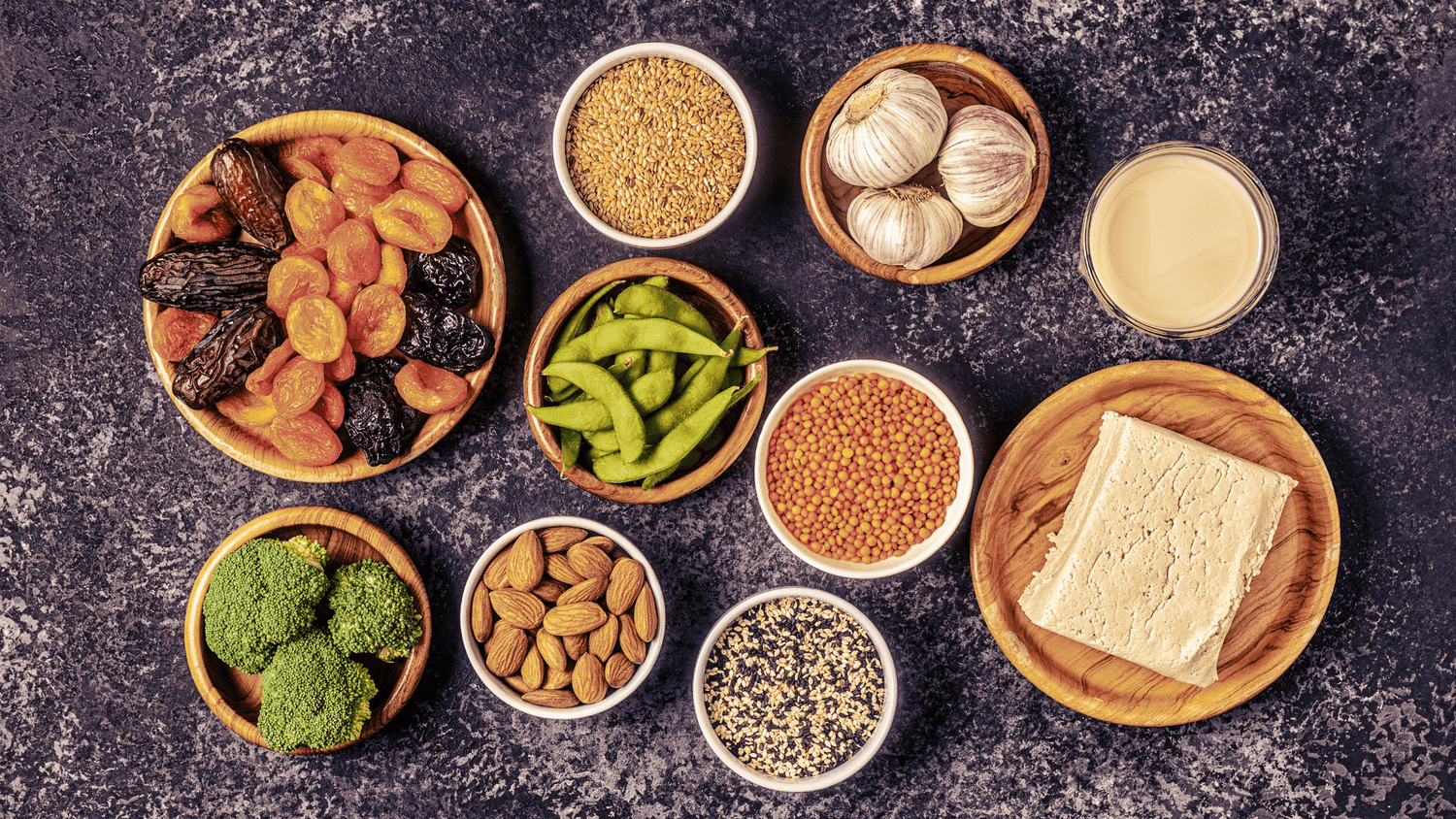
Soy is the richest and most extensively studied source. It comes in various forms, including tofu, tempeh, miso, plant-based beverages, and edamame. Asian populations, whose diets traditionally include soy, have often been studied to understand the impact of isoflavones on menopausal symptoms.
Flaxseeds are another important source, primarily of lignans. They are often consumed ground to improve absorption. Although they offer overall nutritional benefits, particularly for their fiber and fatty acid content, their specific effectiveness in treating hot flashes remains uncertain.
Red clover is commonly used in dietary supplements for postmenopausal women. It also contains isoflavones, but the results of clinical studies on its effectiveness have been mixed.
Other foods, such as certain legumes, whole grains, fruits, and seeds, also contain phytoestrogens, but generally in smaller amounts.

Are natural estrogens effective against hot flashes during menopause?
The effectiveness of phytoestrogens in alleviating the symptoms of menopause, and particularly on hot flashes, has been the subject of numerous studies. The results show a trend toward moderate improvement in some women, but this effectiveness remains generally limited.
Some studies suggest that consuming soy isoflavones may reduce the frequency or intensity of hot flashes. However, these effects are often mild and sometimes comparable to those observed with a placebo.
One of the most frequently cited analyses is a a systematic review and meta-analysis published in 2016, as mentioned by the NCCIH. She brought together 62 studies regarding 6,653 women. Its objective was to evaluate various herbal therapies used during menopause, including phytoestrogens. According to this study, certain supplements, particularly those containingsoy isoflavones, were associated with a modest reduction the frequency of hot flashes and vaginal dryness, but not a significant improvement in night sweats.
Several factors account for this variability:
- The amount consumed
- Exposure duration
- A Woman's Hormonal Profile
- An individual's ability to metabolize phytoestrogens
It therefore appears that phytoestrogens may be beneficial for some women, but they are not a one-size-fits-all solution. Their effectiveness is significantly lower than that of hormone replacement therapy, which remains the standard of care for severe vasomotor symptoms.

Do natural estrogens pose any risks?
The idea that natural substances are risk-free is misleading. Phytoestrogens have hormonal activity, even if it is weaker than that of endogenous estrogens.
Potential risks depend mainly on how they are consumed. A balanced diet that includes natural sources of phytoestrogens is generally considered safe for most women.
Conversely, concentrated dietary supplements raise more questions. They can lead to higher levels of exposure, which is sometimes poorly controlled, and their long-term effects remain insufficiently documented.
Certain situations require special attention:
- History of hormone-dependent cancers
- Thyroid disorders
- Taking hormone therapy
- Long-term use at high doses
In these situations, it is recommended to consult a healthcare professional before regularly taking phytoestrogens in supplement form.

Should we be concerned about a link to breast cancer?
The question of the link between phytoestrogens and breast cancer calls for a nuanced response. To date, the soy consumption does not appear to be associated with an increased risk of breast cancer in the general population, and some human studies even suggest a neutral or potentially protective effect in certain contexts (American Cancer Society). However, caution is still advised for dietary supplements rich in isoflavones, particularly in women with a history of breast cancer or those undergoing hormone-dependent therapy, as their long-term safety remains uncertain (NCCIH). French health authorities also recommend caution in these high-risk situations (ANSES).
It is therefore essential to clearly distinguish between traditional dietary supplements and concentrated forms in capsules, which do not have the same safety profile.

Can you take it during perimenopause?
During perimenopause, hormonal fluctuations are often more complex than a simple decrease in estrogen. The body may still produce significant amounts of hormones, with temporary imbalances between estrogen and progesterone.
In this context, taking phytoestrogens—especially in the form of dietary supplements—is not always appropriate. The NCCIH notes that phytoestrogen supplements may have effects similar to those of estrogen, that their long-term safety has not been established, and that they may not be suitable for women who should not take estrogen.
In France, Vidal also recommends caution with isoflavone supplements, particularly in high-risk situations or when there is a specific hormonal predisposition. An individualized approach, based on symptoms, medical history, and the advice of a healthcare professional, is therefore preferable before starting any supplementation.

Food or supplements: which should you choose?
In most cases, it’s best to start with your diet. Dietary sources of phytoestrogens, such as soy, tofu, tempeh, or flaxseeds, provide more moderate amounts that are easier to incorporate into your daily diet.
TheNCCIH also notes that soy foods are generally considered safe, whereas the effects of supplements remain less certain.
Dietary supplements, on the other hand, contain concentrated isoflavones or other plant extracts, sometimes in high doses, and their quality varies by product. Vidal emphasizes that their use should be supervised and notes potential contraindications, particularly in cases of a personal or family history of hormone-dependent cancers.
This caution is also echoed by theAmerican Cancer Society, which recommends obtaining nutrients from whole foods rather than from soy supplements, as the latter may contain levels of isoflavones far higher than those naturally found in the diet.

What does this mean in practice?
Natural estrogensare a promising but limited option for managing symptoms associated with declining hormone levels.
They may provide some benefit for some women, but their effectiveness varies and is less than that of hormone therapy when symptoms are severe.
Their use must take into account individual circumstances, including medical history and current treatments. Dietary supplements require particular caution due to their high concentration and the lack of long-term data on their effects.
They should be viewed as a complementary approach, not as a systematic alternative to established treatments.
Phytoestrogens may help some women, but their effects are often mild and unpredictable.
For those looking for a immediate solution and non-hormonal To manage hot flashes, it may be helpful to explore other complementary approaches.

Hot flashes: What if you were looking for a non-hormonal, immediate, and portable solution?
For women who want to limit their use of hormonal treatments, Héra is a portable, connected cryotherapy device designed to relieve hot flashes in less than 10 seconds by applying localized cold to heat-sensitive areas such as the face, neck, chest, or wrists.

The device operates between 5°C and 10°C, has a battery life of up to 72 hours, and comes with a tracking and customization app.
Good to know:
- 96% of users are satisfied.
- Over 6,000 customers use Héra every day.
- +20 innovation awards won
- 30-day free trial
Discover Hera now.

FAQ
Are natural estrogens dangerous?
Not necessarily. When they come from food sources, such as soy, flaxseed, or certain legumes, phytoestrogens are generally not considered dangerous for most women. Their hormonal effects are mild compared to the estrogen produced by the body or to hormone therapies.
However, caution is advised when usingconcentrated dietary supplements, as the doses are higher, usage patterns vary widely, and certain situations require medical advice—particularly in cases of a history of hormone-dependent cancer, thyroid disorders, or ongoing treatment.
What is the best phytoestrogen?
There is no single “best” phytoestrogen. Soy isoflavones have been the most extensively studied in the scientific literature, particularly for their potential effect on menopausal hot flashes
However, their effectiveness depends largely on the individual, the gut microbiota, the ability to metabolize certain molecules, and the severity of symptoms. In some women, the effect may be noticeable; in others, it may be minimal or even nonexistent. That is why it is better to refer to them as apossible solution rather than a universal cure.
Is soy recommended during menopause?
Yes, soy can be consumed during menopause as part of a varied and balanced diet. It is the primary dietary source of isoflavones, the best-known phytoestrogens.
For some women, it may help improve their overall well-being, particularly by alleviating hot flashes. In practice, moderate consumption of tofu, soy milk, tempeh, or edamame is generally recommended over taking high-dose supplements. If you have a specific medical history, it is best to consult a healthcare professional.
Can phytoestrogens replace hormone therapy?
No. Phytoestrogens are not a substitute for hormone therapy for menopause when it is medically indicated. Hormone therapy remains the most effective option for relieving severe symptoms, particularly severe hot flashes and highly debilitating night sweats.
Phytoestrogens can sometimes be considered as a complementary support or as an option for women seeking a non-hormonal approach, but their effects are generally more modest and less consistent.
Is it safe to take phytoestrogens after breast cancer?
This situation absolutely requires personalized medical advice. It is not recommended to start taking phytoestrogen-rich supplements on your own after breast cancer, especially if the cancer was hormone-dependent.
The issue is more complex when it comes to foods that naturally contain soy, but even in such cases, it is best to consult your oncologist or doctor. The goal is to avoid any adverse interactions with your current treatments and to take your individual risk profile into account.
Are flaxseeds effective?
Flaxseeds are nutritionally beneficial because they provide lignans, fiber, and plant-based omega-3s. As a result, they are often recommended as a healthy addition to a balanced diet during menopause.
However, their specific effectiveness in treating hot flashes has not been clearly demonstrated. Some women find them helpful, but the available studies do not show consistent benefits. They can therefore be viewed as a beneficial food for overall well-being, but should not be presented as a guaranteed solution for symptoms.
Do natural estrogens work immediately?
No, not generally. Phytoestrogens from food or supplements do not have an immediate effect on symptoms. When there is a benefit, it tends to appear gradually, after several weeks of regular use.
This is a key difference from certain targeted non-hormonal approaches designed to provide rapid relief from hot flashes.
Diet or supplements: which should you prioritize?
In most cases, it is safer to prioritize diet over supplements. Foods that naturally contain phytoestrogens fit more easily into a comprehensive health plan, with lower exposure levels.
Dietary supplements, on the other hand, may contain high doses and are not suitable for all women.
They should not be taken lightly, especially if there is a history of medical conditions or significant symptoms.
Is it possible to consume too many phytoestrogens?
Yes, excessive consumption—especially when taking multiple supplements together—is not advisable. The problem doesn’t necessarily stem from foods consumed in moderation, but rather from the accumulation of “menopause-specific” products taken at the same time.
That is why it is important not to use multiple sources without guidance and to keep in mind that “natural” does not mean “ineffective.”
Are phytoestrogens suitable for all women?
No. Their suitability depends on a woman’s hormonal profile, the severity of her symptoms, her age, her personal history, and her overall medical condition. They may be considered for some women in perimenopause or menopause, but they are not necessarily suitable for everyone or in every situation.
If you have any doubts, experience severe symptoms, or have a history of medical conditions, it is always best to seek professional advice.

Join the Athana community!
Discover Héra and get reliable information about menopause, its symptoms, and ways to manage it more effectively.
Follow us on social media:
- Instagram:@athana.off
- TikTok:@athana.off
- Facebook:Athana
- LinkedIn:Athana
30-day money-back guarantee.
Have a question? Email us atinfo@athana.shop

Leave a comment
All comments are moderated before being posted.
This site is protected by hCaptcha, and hCaptcha’s Privacy Policy and Terms of Service apply.