
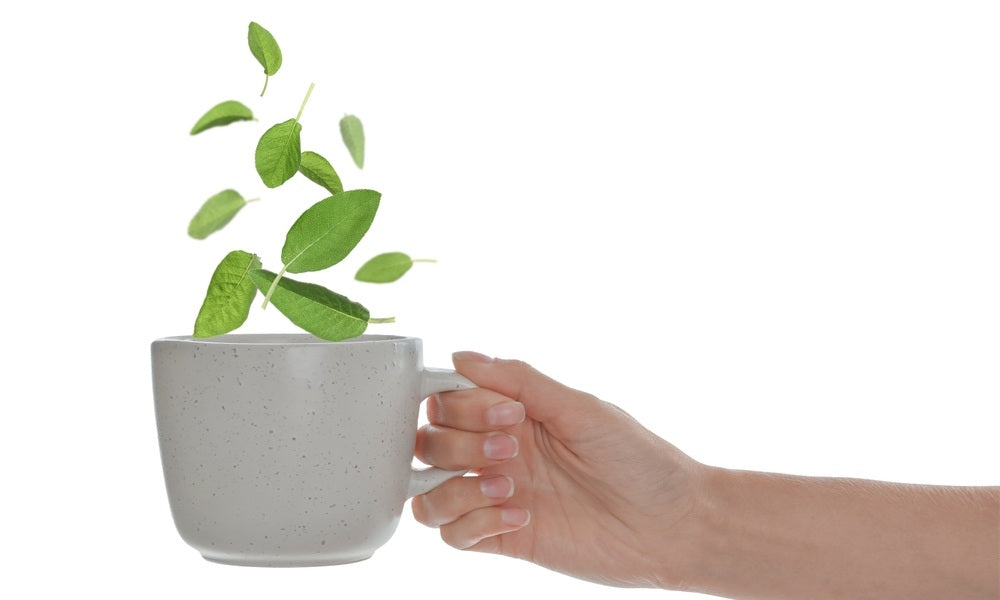
When the body decides to change its rhythm, it is not always a smooth process. Menopause does not come with an instruction manual, and certainly not with a precise date. It imposes itself, sometimes slowly, sometimes brutally, with its fair share of manifestations: hot flashes, sleep disturbances, mood swings, unexplained fatigue, loss of concentration… all these symptoms of menopause that disrupt a previously stable balance.
In this hormonal transition, every woman seeks her bearings. Some turn to conventional treatments, others prefer a more natural approach that is more respectful of the body's overall functioning. And it is often at this moment that common sage comes onto the scene.
- What is sage?
- The benefits of sage
- Which sage is best for menopause?
- What are the contraindications for sage?
- How to take sage for menopause: dosage and recommendations
- What are the reviews on sage-based dietary supplements for menopause?
- What to remember about this special plant?
A medicinal plant among the oldest in our pharmacopoeia, sage fascinates as much as it intrigues. Its use has been documented since antiquity, but it is the richness of its active compounds—flavonoids, rosmarinic acid, essential oils—that attracts the attention of modern science today. It is particularly recognized for its phytoestrogenic activity, that is, its ability to mimic the effects of estrogen, making it an increasingly sought-after natural remedy for menopause.
The benefits of sage cover a wide spectrum: anti-hot flash support, sleep aid, improved digestion, positive effects on memory, antioxidant properties, and even strengthening of the immune system. At the same time, its potential effects on hormone-dependent cancers invite caution and underline the importance of knowing your usage profile well!
This article offers a complete, nuanced, and accessible approach to sage in the context of menopause: from its true effects to how to use it safely, and the contraindications to respect.
What is common sage?
 Sage is not a recent discovery, nor is it a simple kitchen herb. Its name, Salvia officinalis, comes from the Latin salvare, which means to save or to heal. An etymology heavy with meaning, as this plant has crossed civilizations with an almost mystical reputation.
Native to the Mediterranean basin, common sage grows in dry, sun-drenched soils. The Romans already used it in their medicinal rituals, considering it possessed almost sacred virtues. In the Middle Ages, it held a prominent place in monastic gardens, cultivated not only for its aroma but also for its symbolism of longevity and protection.
Some ancient treatises went so far as to say that "whoever has sage in their garden has no need for a doctor."
Over the centuries, it has managed to maintain its place in traditional pharmacopoeias, always associated with the idea of body and mind balance. It was found in infusions, balms, decoctions, and even steam baths: its use was both preventive and curative, according to folk traditions.
If sage has spanned the centuries, it is not only for its historical roots; it continues to be cultivated, studied, and used because it also offers an unexpectedly wide range of natural benefits. Whether it be for hormonal disorders, memory problems, digestion, nervous fatigue, night sweats, or protection against oxidative stress, it stands out today as one of the most versatile plants in modern phytotherapy.
The benefits of sage
 If common sage generates so much interest today, it is not because of a trend, but because it meets very real needs… behind this plant with Mediterranean origins hides a set of natural actions capable of supporting the body on several fronts.
Used as much for its phytoestrogenic activity as for its effects on sleep disturbances like insomnia, or the immune system, sage stands out as a fundamental ally, especially when going through periods of hormonal imbalances like menopause.
Just like cryotherapy, it acts without brutality, but with an effectiveness that can sometimes surprise. In infusion, as a dietary supplement, or as an essential oil, it accompanies many women in search of a more natural well-being.
It remains to be understood precisely how and why it acts... and that is what we will explore in the next sections!
Sage and menopause
As the body enters perimenopause, it is not just a hormonal change: it is an entire balance that is being redefined, and it is precisely in this context that common sage finds all its relevance.
Thanks to its richness in active compounds, including flavonoids and essential oils, sage acts as comprehensive support to manage the imbalances typical of this period. Its phytoestrogenic activity allows it to gently mimic the effects of estrogen: it does not replace their production, but it partially compensates for the deficiency.
This natural property makes it an increasingly appreciated alternative to synthetic hormone treatments.
In practice, this often translates into a reduction of hot flashes, better thermal comfort, more stable mood, and better sleep quality. Some women also report a decrease in fatigue and a feeling of returning to themselves, not because the plant acts as a hormone replacement, but because it supports the body in its ability to adapt.
This ability to promote relief without deeply disturbing the body makes it a natural menopause remedy that is particularly interesting, especially for those seeking a gentler, more respectful, and less invasive approach to their hormonal well-being.
How does sage act on hormones?
One of the most interesting peculiarities of sage lies in its ability to act indirectly on hormonal balance, especially during menopause. It does not produce hormones per se, but it contains phytoestrogenic compounds, plant substances capable of binding to the same receptors as human estrogen.
This mechanism of action allows it to partially mimic the effect of estrogen on certain sensitive tissues of the body: hypothalamus, skin, mucous membranes, vasomotor system. During periods of hormonal disorders, when natural estrogen drops sharply, these plant compounds can help regulate the biological responses affected by this deficiency.
Thus, in many women, we observe a reduction in hot flashes, better regulation of body temperature, and sometimes an improvement in sleep, mood, or even libido. These effects are not systematic, but certain studies like the Journal of Family Medicine and Primary Care in 2020, have nevertheless scientifically demonstrated that sage could have quite impressive effects.
They are documented and explained by the subtle interaction of sage with the endocrine system.
Note that the action of sage primarily targets estrogen, because to this day, no serious scientific evidence indicates a direct influence on progesterone or androgens. That said, by helping to restore a certain balance, it can indirectly foster better global communication between hormones, particularly via the hypothalamic-pituitary-ovarian axis.
Sage and cancer
Among the many properties of this magical plant, some have attracted the attention of researchers for their anticancer potential. But although it is sometimes discouraged in cases of hormone-dependent cancer, sage is not limited to an estrogen-like action, which mimics the effects of estrogens themselves, as it also contains several bioactive compounds that could play a role in cancer prevention.
Among them, rosmarinic acid, a polyphenol naturally present in sage, is particularly studied. This compound possesses powerful antioxidant properties, capable of neutralizing free radicals and limiting oxidative damage at the cellular level. These actions are essential because oxidative stress is a recognized factor in the formation and progression of cancer cells!
In vitro studies have also suggested that sage extract could inhibit the growth of cancer cells by inducing apoptosis (programmed cell death) and reducing angiogenesis (the formation of new blood vessels that nourish tumors). Furthermore, promising results have been observed on colon, breast, and liver cancer cell lines. But why? Because these effects are thought to be due to the combined action of flavonoids, diterpenes, and rosmarinic acid present in the plant.
However, it is crucial to distinguish between what science observes in the laboratory and what is clinically validated… to date, sage can in no way replace an anticancer treatment, even if studies have proven that gallic acid could improve the efficacy of chemotherapy. It can, however, be part of a complementary approach, under medical supervision, particularly to support immune defenses or reduce the side effects of certain treatments.
In summary, sage possesses interesting anticancer potential, linked to its antioxidant properties and its effects on cellular metabolism. But this potential must be considered with caution, especially in women at risk of hormone-dependent cancer, because, in effect, the phytoestrogenic activity of sage could feed the tumor in some cases…
Sage and diabetes
Menopause is sometimes accompanied by metabolic imbalances, and among them, an increased sensitivity to insulin or the onset of type 2 diabetes, and it is in this context that common sage reveals itself to be a very good natural solution. Several studies have observed its potential effect on glycemic regulation, particularly through its action on certain enzymes related to glucose absorption.
Concretely, sage could help control blood sugar levels by reducing sugar spikes in the blood after meals. Its use is thus part of a comprehensive approach to diabetes management, alongside a balanced diet, regular physical activity, and, of course, appropriate medical follow-up.
Although it does not replace medication, sage can offer natural support to menopausal women concerned with metabolic disorders, while providing other benefits related to this transition period.
Sage and memory disorders
Decreased concentration, brain fog, mental fatigue, and depression… these feelings are frequent during menopause, and it is no coincidence because this hormonal change also impacts cognitive functioning. Common sage, thanks to its antioxidant properties, could provide interesting support in this area.
Research has highlighted its positive effect on brain function, particularly on short-term memory and mental clarity. The rosmarinic acid contained in the plant is believed to contribute to the protection of nerve cells by limiting the effects of oxidative stress, which is known to accelerate brain aging.
Although it is not a stimulant with an immediate effect, sage seems to act in the background, supporting cognitive function over time. For women who feel more scattered or mentally slowed down during menopause, this can represent real daily support.
Which sage is best for menopause?

- Common sage: this is the variety best suited to the needs of menopausal women. It naturally contains phytoestrogenic compounds capable of gently mimicking the action of estrogen, which helps regulate certain menopause symptoms. Its effectiveness is well-documented, and this is the form found in the majority of dietary supplements targeting female hormonal balance.
- Clary sage: less well-known to the general public, it is nevertheless widely used in aromatherapy, particularly in the form of essential oil. Its action focuses primarily on emotional well-being: it helps release tension, soothes anxiety, and supports nervous balance.
Why should white sage not be used?
White sage or Salvia apiana is often associated with energy cleansing rituals; it has no recognized virtue in hormonal herbal medicine. It does not contain the active compounds found in common sage, and its internal use is strongly discouraged, particularly for women prone to hormonal disorders or at risk of hormone-dependent cancer.
It therefore provides no specific benefit for menopause.
What are the contraindications of sage?
 Even though it is of plant origin, sage remains an active and powerful plant that is not suitable for all profiles. Before incorporating it into your wellness routine, it is important to know the situations in which its use may pose a problem. Here are the main contraindications to observe:
- Hormone-dependent cancer (breast, uterus, ovaries): as we have already explained, sage contains phytoestrogenic compounds that can interact with hormonal receptors. In people with or having a history of cancers sensitive to estrogen, its use could theoretically stimulate tumor cells. It is not strictly forbidden, but it must always be validated by a doctor in this context.
- For people with epilepsy: one of the components of sage, thujone, can have neurotoxic effects in high doses. It is likely to promote seizures, especially in concentrated use (supplements, essential oils). It is therefore formally contraindicated for people suffering from epilepsy.
- For pregnant or breastfeeding women: sage can stimulate uterine contractions and thus increase the risk of miscarriage or premature birth. When breastfeeding, it tends to inhibit lactation, which can be problematic for both mother and infant. As a precaution, it is discouraged throughout pregnancy and breastfeeding, in any form whatsoever.
- For children under 12 years of age: due to the sensitivity of their hormonal and hepatic systems, children should not consume sage internally. Even if it may seem harmless as a herbal tea, the risk of overdose or imbalance is real in the youngest.
- In case of diabetes treatment: sage can help naturally lower blood sugar levels. If you are already under antidiabetic treatment, its consumption can accentuate the hypoglycemic effect and cause an excessive drop in blood sugar.
- Liver disorders: regular consumption of sage tea, or a prolonged course of supplements, can strain the liver. In case of known liver disease or a fragile liver, it is very preferable to avoid consuming it!
- Prolonged use or high doses: as with many active plants, sage can become toxic in high doses. An excess can cause digestive problems, nervousness, or even neurological disorders or liver overload. It is recommended to follow short treatments (3 weeks max), interspersed with breaks.
- Essential oil orally: sage essential oil is extremely concentrated in thujone. Its ingestion is potentially neurotoxic and must be strictly reserved for use supervised by a healthcare professional or an experienced aromatherapist. It should never be taken alone or as self-medication.
How to take sage for menopause: dosage and recommendations
 Common sage can be consumed in several ways, depending on your preferences and needs. The simplest form remains the infusion of dried leaves. It is generally recommended to have 1 to 2 cups per day, using about a teaspoon of plants per cup of hot water. This gentle method allows you to enjoy its benefits for menopause while limiting concentrations that are too high in active ingredients.
For a more targeted effect, it is possible to opt for liquid extracts, such as the mother tincture. In this case, the usual dosage varies between 25 to 50 drops diluted in a glass of water, two to three times a day. Again, it is essential to respect the doses and not to prolong the intake beyond a few weeks without medical advice.
Sage dietary supplements are another interesting option that we will expand upon in the following section…
Regardless of the form chosen, sage should not be consumed continuously. It is recommended to proceed by small recurring treatments, followed by a break of about a week. This helps prevent excessive accumulation of certain compounds, particularly thujone.
Finally, let us remember that sage is not suitable for all profiles.
It is to be avoided by pregnant or breastfeeding women, children, people with epilepsy, those on antidiabetic treatment, or those presenting liver disorders. In case of doubt or parallel treatment, it is better to seek advice from a healthcare professional, because even natural remedies need a framework to be used in complete safety.
Opinions on sage-based dietary supplements for menopause
 Many women looking for natural solutions to relieve the effects of menopause are now turning to common sage dietary supplements. This ready-to-use format offers real convenience, especially when you do not want to prepare infusions daily or are looking for a precise concentration of active ingredients.
The feedback is generally positive. Many report a progressive improvement, particularly with hot flashes, night sweats, feelings of fatigue, or mood stability. Some women also observe better sleep and a decrease in minor functional disorders linked to this period of hormonal transition.
However, not all products are equal.
It is essential to choose supplements whose formulation is balanced, clear, well-dosed, and above all traceable… for example, references certified organic or from reputable French or European laboratories provide a guarantee of quality. It is also better to favor standardized extracts, which guarantee a constant concentration of active ingredients.
Some supplements combine sage with other plants with synergistic effects, such as maca, hops, or even black cohosh. This combination can reinforce the action on complex hormonal disorders, especially when symptoms affect both the physical and emotional aspects.
Finally, as with any natural supplement, effectiveness will also depend on individual metabolism, lifestyle, and the moment the product is introduced into the menopausal journey. On the other hand, it is important to remember that professional advice is always useful, especially in case of parallel medical treatment.
What to remember about this very special plant?
 Common sage is a plant that has stood the test of time, but it has probably never been as relevant as it is today, especially for supporting women through this often misunderstood stage that is menopause. It offers a natural treatment, nuanced, respectful of the body and its cycles, where many other solutions seem too invasive or too impersonal.
Without claiming to replace medical treatment, it acts on several levels: hormonal regulation, emotional support, relief of physical symptoms. It can be integrated into a wellness routine, provided that its uses, limits, and contraindications are respected… because behind its apparent simplicity, sage is an active and powerful plant.
What we remember most is that it offers an intermediate solution between medicine and tradition, between listening to the body and concrete support. A way to reconcile with hormonal upheavals, by bringing more gentleness, clarity… and a certain return to oneself.
In a world where everything moves fast, sage offers another rhythm: that of regained balance, in small sips, in small steps. And what if, deep down, that was exactly what we needed?
FAQ about sage during menopause
What is the best plant for menopause? Common sage remains one of the most effective and well-documented plants to support menopause. Thanks to its gentle phytoestrogenic activity, it can relieve common symptoms such as hot flashes, chronic fatigue, sleep disorders, or mood swings. It is distinguished by its versatility and its ability to support the body without aggressively disrupting hormonal mechanisms.
What do the Chinese take for menopause? In China, menopause is often approached through traditional Chinese medicine, which aims to rebalance the body's energies rather than just compensating for the drop in hormones. Among the most used plants are dang gui (Chinese angelica), white peony, or prepared rehmannia, often combined in formulas to relieve hot flashes, irritability, and fatigue.
Is it possible to drink sage herbal tea every day? Yes, but not continuously. A herbal tea based on dried common sage can be taken daily, at a rate of one to two cups per day, as part of a three-week treatment maximum. It is then recommended to take a break of at least one week to avoid any accumulation of active compounds, especially those that can overload the liver.
How to use sage for hot flashes? Sage can be used in several ways to relieve hot flashes: as an infusion, with dried leaves at a rate of one cup once or twice a day. As a dietary supplement, for more targeted and regular dosage. Or in the form of essential oil diluted in a vegetable oil and applied in massage on the lower back, abdomen, or wrists.


Leave a comment
All comments are moderated before being published.
This site is protected by hCaptcha and the hCaptcha Privacy Policy and Terms of Service apply.