
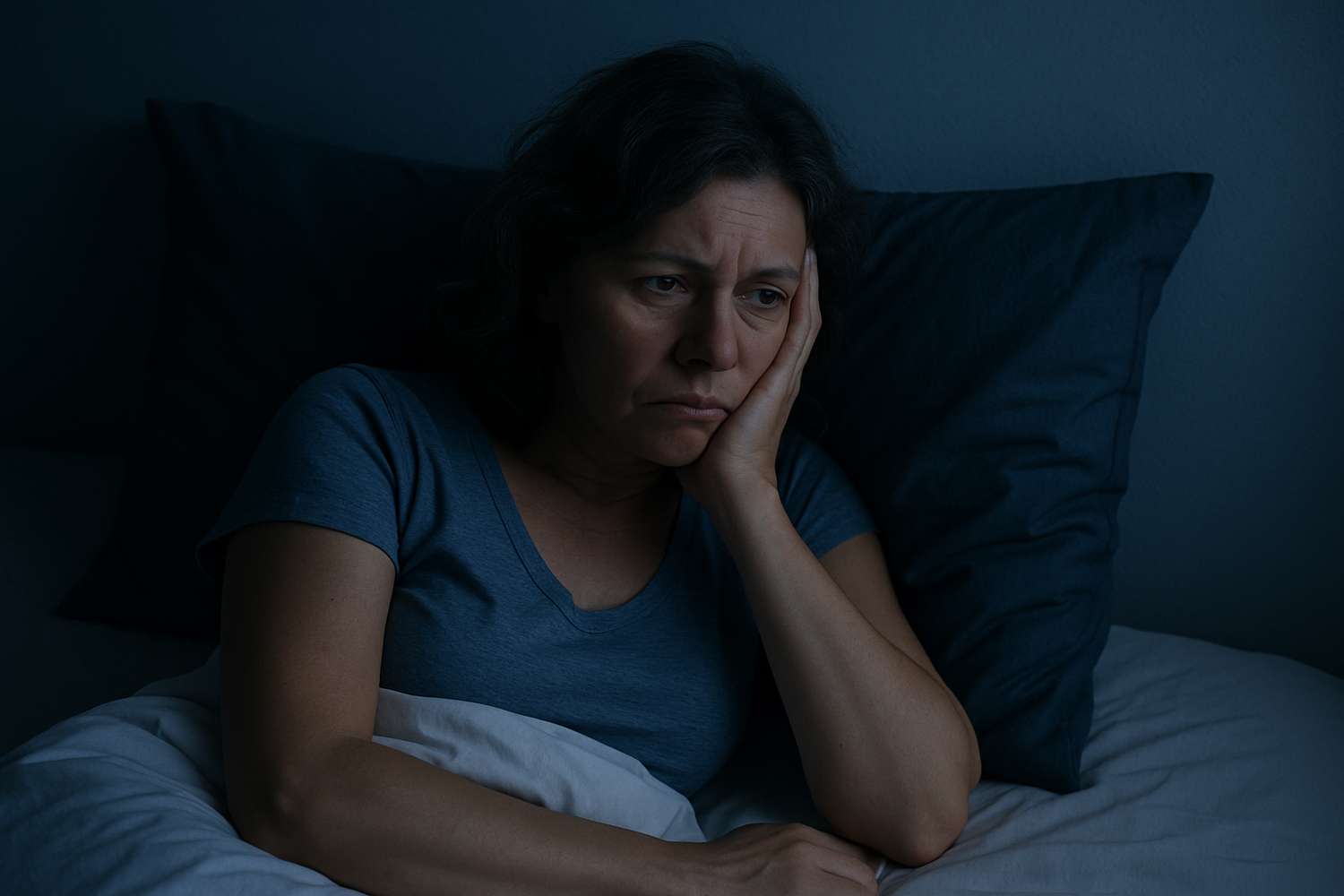
Better sleep during menopause, a challenge that can be overcome
Summary
- Better sleep during menopause
- Why does menopause prevent you from sleeping well?
- What are the effects of poor sleep during menopause?
- How can you sleep better during menopause? 17 natural solutions
- Common mistakes to avoid for a good night's sleep
- Testimonials from women
- FAQ – How can you sleep better during menopause?
- Sleeping well during menopause is possible!
How can you sleep better during menopause?
This question often comes up for women between 45 and 55, who are dealing with increasingly restless nights. While sleep used to be natural, it suddenly becomes fickle: frequent awakenings, hot flashes, insomnia, night sweats, anxiety… Menopause turns the bed into a battlefield.

These sleep disturbances are not trivial; they affect vitality, mood, memory, and even hormonal balance. But there is good news: there are natural, effective, and accessible solutions to regain control of your nights.
In addition to this guide, you can also consult our article Menopause and mental health: treating mood disorders, to understand how anxiety and sleep are linked.
In this article, you will discover 17 concrete strategies to sleep better during menopause, based on gentle approaches, a better lifestyle, herbal advice, and innovative tools like cryotherapy. Because yes, it is entirely possible to regain deep, restorative, and liberating sleep… even during periods of hormonal upheaval.
Why does menopause prevent you from sleeping well?
The role of hormones in sleep quality
One of the most frequent and confusing effects of menopause is undoubtedly sleep disturbance. The gradual decline in estrogen and progesterone affects the sleep-wake cycle and body temperature, two essential elements for a good night's sleep. As a result, insomnia, nocturnal awakenings, and the feeling of non-restorative sleep become commonplace.
Restless nights every day
Nocturnal hot flashes, sometimes accompanied by sweating, cause you to wake up with a start, sometimes multiple times a night. Added to this are mental rumination, increased anxiety, and difficulty falling back asleep. These disturbances create a vicious cycle: the worse you sleep, the more menopause symptoms intensify, and the less you recover.
What are the effects of poor sleep during menopause?
Chronic fatigue and physical ailments
Sleeping poorly during menopause is not trivial. Lack of sleep weakens the immune system, promotes weight gain, slows down the metabolism, and increases muscle pain. Cortisol, the stress hormone, increases, further deregulating the hormonal system.
Anxiety, irritability, unstable mood
Disturbed sleep makes the brain more sensitive to stress. This translates into irritability, mood swings, increased sensitivity to daily events, and difficulty concentrating.
How can you sleep better during menopause? Here are 17 natural and effective solutions

1. Establish a stable sleep routine
Try to go to bed and wake up at fixed times, even on weekends. This strengthens your internal clock and makes it easier to fall asleep.
2. Create a calming pre-sleep ritual
A warm bath, a relaxing herbal tea, soft music, or a few pages of a good book can signal to your body that it is time to slow down.
3. Keep the bedroom cool and comfortable
A temperature around 18°C (64°F), cotton or linen sheets, and a well-ventilated room are all elements that limit nocturnal hot flashes. You can also consult our article Anti-hot flash: causes and natural solutions to discover targeted tips against these heat surges that disturb sleep so much.
4. Turn off screens at least one hour before bed
The blue light from screens blocks melatonin secretion. Prefer dim lighting and calm activities.
5. Move every day, but not too late
A walk in the late afternoon, gentle yoga, or swimming help to balance the nervous system and release stress.
6. Eat light in the evening
Avoid heavy or spicy dishes. Opt for a dinner rich in tryptophan (eggs, almonds, bananas) to naturally stimulate serotonin production.
7. Limit coffee, black tea, and alcohol
These substances are enemies of sleep. Prefer herbal teas based on calming plants.
8. Turn to herbal medicine (phytotherapy)
They act on the central nervous system and promote peaceful sleep onset. To learn more, discover Sage and menopause: the benefits of this magic plant, the complete guide on its action against menopause symptoms.
Plants to combat hot flashes: common sage, black cohosh
They regulate the hormonal imbalances responsible for nocturnal awakenings.
9. Diffuse calming essential oils
True lavender, Roman chamomile, or sandalwood are excellent for creating a serene atmosphere in the bedroom.
10. Practice cardiac coherence or meditation
Three minutes of deep breathing before bed reduces anxiety and improves sleep quality.
11. Create a cocoon conducive to relaxation
Quality mattress, adapted pillow, silence or white noise, soft light—every detail counts.
12. Test innovative devices like Héra
The Héra device offers portable cryotherapy that relieves nocturnal hot flashes. It provides an instant cooling sensation that helps you return to a calm state. To better understand how it works, read Cryotherapy and menopause: what are the benefits?.
13. Accept micro-awakenings without tension
Stay lying down, breathe deeply, avoid checking the time, and let the moment pass.
14. Consider natural supplements
Low-dose melatonin, marine magnesium, or GABA can naturally support your sleep-wake cycle.
15. Keep a night journal
Writing down what you are feeling or any intrusive thoughts before bed allows you to free your mind and relax.
16. Do not hesitate to consult a professional
A sleep specialist or menopause expert can offer personalized support tailored to your specific symptoms.
17. Commit to a sustainable mind-body approach
Sleeping better during menopause is not just about a few tips. It is a true long-term commitment to yourself to take care of your hormonal, emotional, and physical balance. To better understand this phenomenon and manage it, you can read Menopause and fatigue: causes and solutions.
Among all these natural approaches, some women also choose to use concrete tools to regain better sleep. It is precisely to meet this need that we created Héra, an innovative device that naturally relieves hot flashes: one of the primary triggers of insomnia during menopause.

Common mistakes to avoid for sleeping well during menopause
Going to bed too early or too late
Sleeping with the television on
Ruminating on thoughts in bed
Ignoring the first signs of fatigue Turning to sleeping pills without medical supervision
Testimonials from women who regained sleep during menopause
- Marie, 53: "I completely stopped coffee and adopted cardiac coherence. My nights are transformed."
- Isabelle, 49: "Sage-lemon balm infusion and lavender in the room have become my sacred ritual."

FAQ – How can you sleep better during menopause?
1. Why does menopause disrupt sleep so much?
It alters the production of hormones that regulate sleep and body temperature.
2. What should I do if I wake up several times a night?
Stay calm, breathe, avoid screens, and practice mindfulness.
3. Are plants really effective?
Yes, especially with regular use over several weeks. They help reduce anxiety and soothe awakenings.
4. Can I take melatonin every night?
Yes, in low doses (0.5 to 1 mg), but always after medical advice.
5. Are relaxation exercises useful?
Absolutely. They decrease cortisol, regulate heart rate, and prepare the body for rest.
6. Should I consult a doctor if nothing works?
Yes. A professional can assess the situation and offer comprehensive care.
Conclusion: Sleeping well during menopause is possible!
Regaining quality sleep during menopause requires a conscious and progressive approach. By combining lifestyle habits, natural solutions, and adapted support, it is entirely possible to break the vicious cycle of menopausal insomnia.
How can you sleep better during menopause? By listening to your body, adopting new routines, and allowing yourself the rest you deserve.


Leave a comment
All comments are moderated before being published.
This site is protected by hCaptcha and the hCaptcha Privacy Policy and Terms of Service apply.